

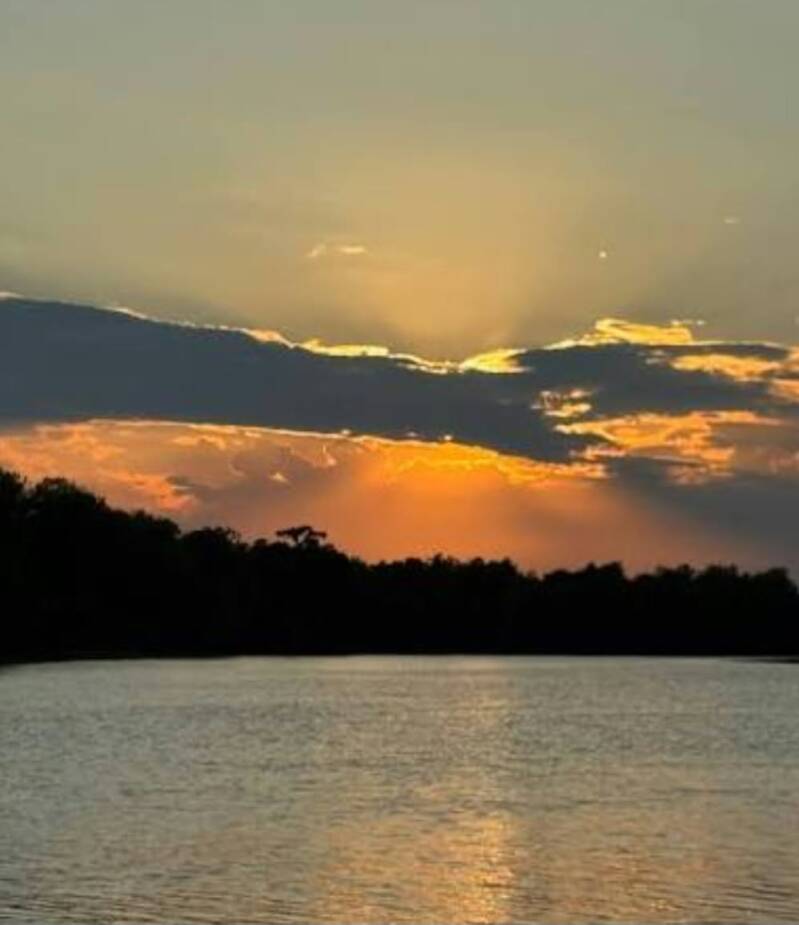
Rougarou Road Trip — Stop 2: Lake Maurepas — Where The Rougarou Culls The Oysters
If you done drove I-55 or Highway 51 near LaPlace, you looked out at it and thought "that's just shallow water."
Baby, that shallow water is Lake Maurepas — and old fishermen will tell you, it's got something in it that walks on two legs.
Welcome back to the Rougarou Road Trip!
If Stop 1 was where we learned what the Rougarou is — our Cajun loup-garou, half-man half-wolf brought over from France to keep kids out the swamp — Stop 2 is where we learn where he hunts.
And cher, he hunts Lake Maurepas.
👉 Shop Nana's Lake Maurepas Safety Kit: Get it here
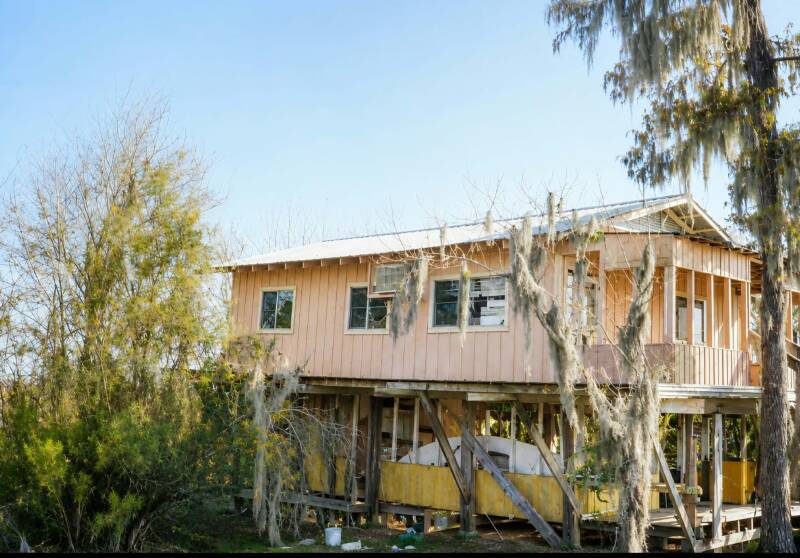
This right here is Daddy's crabbing camp.
Y'all, this ain't just a picture for me — this is where I grew up every crabbing season, right at the mouth of Lake Maurepas. That little house on stilts was home for weeks at a time. No fancy plumbing, mosquitoes thick enough to carry you off, and Daddy up before the sun every single morning checking his crab pots (that's what he called his traps).
But baby, that camp taught me everything. How to read the water. How to respect it. How to work hard and still laugh through it.
Every survival skill I got, every hard lesson about this swamp giving and this swamp taking — I learned it standing right there on that dock.
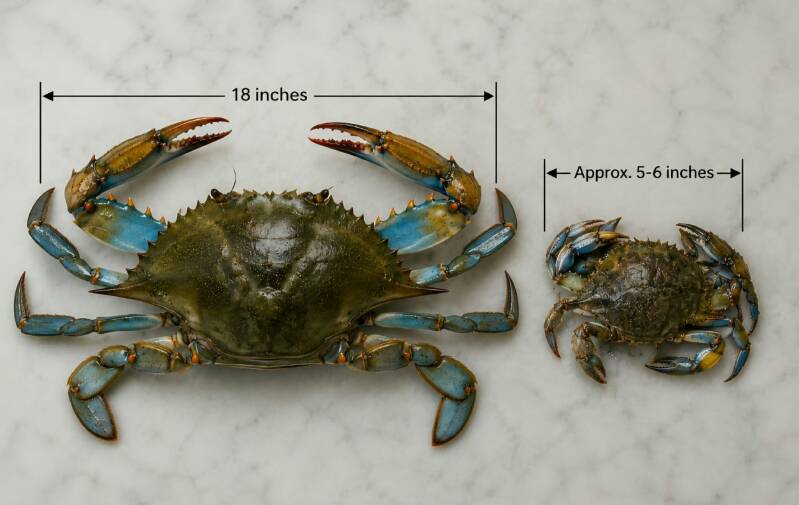
And this next picture, cher — this is the real Rougarou.
Not a wolf-man in the cypress. This.
Back in Daddy's day, a #1 crab was 18 inches, point to point. A monster. You'd need two hands just to hold him steady. Look at what a "#1" crab looks like now — 5, maybe 6 inches if you're lucky. That's not a smaller crab, y'all.
That's a whole different population trying to survive what we've done to it.
Pollution. Overfishing. Folks not respecting the limits of a very delicate ecosystem, not respecting the seasons, not respecting that this water can't give forever if we don't give it something back.
The Rougarou was always supposed to be a warning — stay on the path, don't take more than you need, respect what's wild. Well, we stopped listening a long time ago. And this lake is showing us the receipts.
I don't say this to guilt anybody. I say it because Daddy's camp is gone now, and that big crab is gone too, and I don't want my grandbabies growing up thinking a 6-inch crab was always normal. It wasn't. Ya hear me?
Where Is Lake Maurepas?
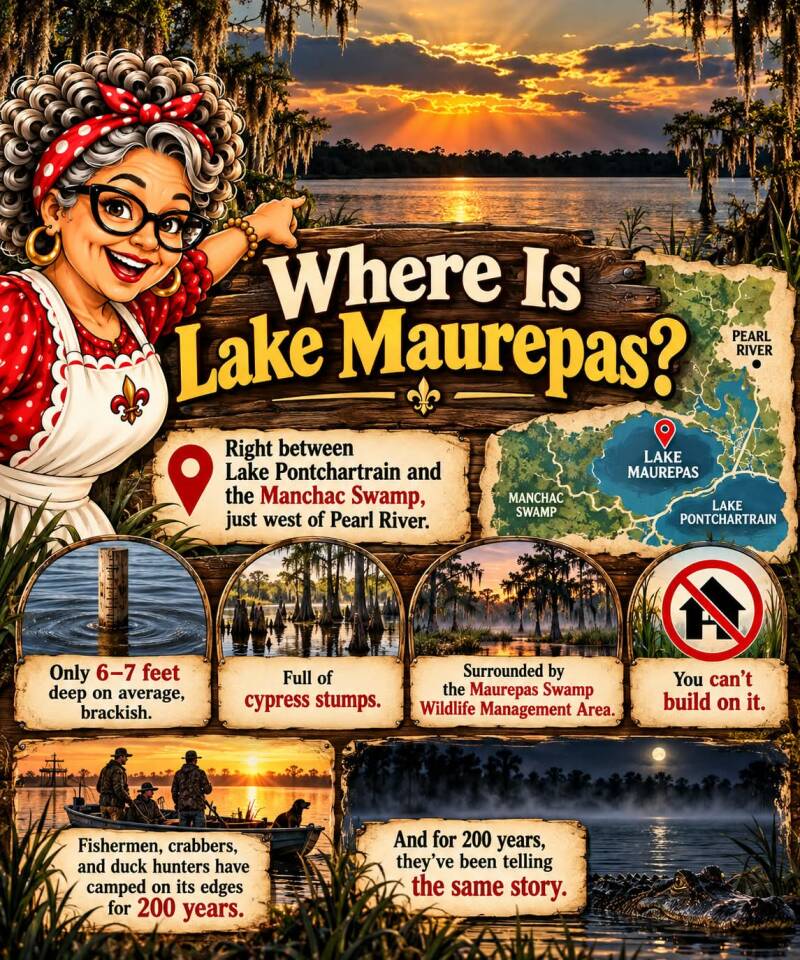
Right between Lake Pontchartrain and the Manchac Swamp, just west of Pearl River. It's only 6-7 feet deep on average, brackish, full of cypress stumps, and surrounded by the Maurepas Swamp Wildlife Management Area. You can't build on it. You can barely see across it at night.
Fishermen, crabbers, and duck hunters have camped on its edges for 200 years. And for 200 years, they've been telling the same story.
The Lake Maurepas Rougarou Stories
Story #1: The Oyster Cullers — The Oldest Story From The Lake
This is the one from the Pitre books that every oysterman near Frenier knows.
Long time ago, fishermen would camp on the lake overnight near their oyster leases. One night they kept hearing something splashing in their skiffs — culling their oysters, like a person picking through them. They'd shine a lantern, see nothing. No other boats for miles. Open water.
Morning comes — one skiff is FULL of culled oysters, half-eaten. This happened night after night.
One brave young fisherman hid in the boat to catch the thief. Late at night he saw a shadow — tall, hairy, hunched over the oysters — moving like a man but covered in dark hair. He hit it with a push pole and it vanished.
In another version, the creature always eats half of what it culls. Leaves the other half for the fisherman. Helpful? Scary? Both? That's our Rougarou — not always a killer, but always watching.
Story #2: The Hunting Camp That Got Torn Through
This one I hear at least twice a year from duck hunters.
A hunting camp on the north side of Maurepas — quiet night, dogs whining, then something big runs straight through camp on two legs. 7-8 feet tall, coarse dark fur, glowing red or yellow eyes, moving faster than any man should. Tears up an ice chest, rips a screen door off, leaves claw marks 8 feet up on a cypress tree.
Hunters find big footprints next morning — part human, part wolf — that go from all-fours to two feet.
They don't hunt that spot after dark no more.
Story #3: Fishermen's Red Eyes
Modern stories from the last 20 years — bass fishermen launching early morning near Reserve and Ruddock say they see red eyes reflecting on the far bank. They hear a howl that ain't a coyote — too deep, too long. And their trail cams? Smashed, 8 feet up a tree. Whatever did it stood up to reach it.
Lake Maurepas is shallow and isolated. Sound travels weird out there. And at night, it feels alive.
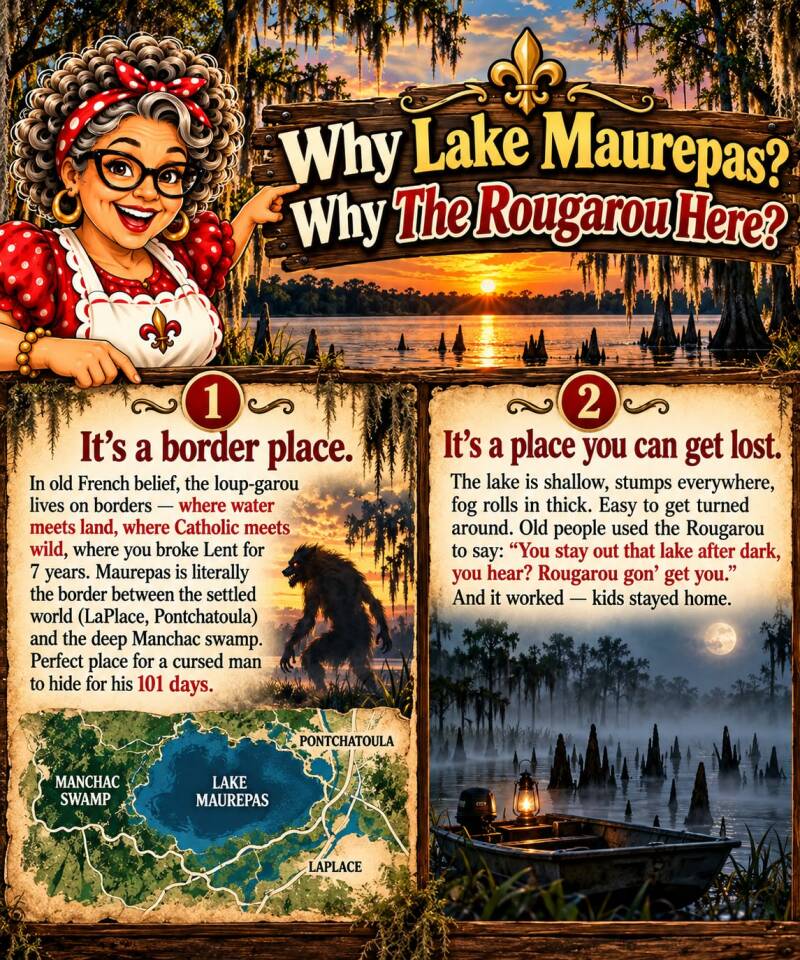
Why Lake Maurepas? Why The Rougarou Here?
Two reasons Cajuns give:
1. It's a border place. In old French belief, the loup-garou lives on borders — where water meets land, where Catholic meets wild, where you broke Lent for 7 years. Maurepas is literally the border between the settled world (LaPlace, Ponchatoula) and the deep Manchac swamp. Perfect place for a cursed man to hide for his 101 days.
2. It's a place you can get lost. The lake is shallow, stumps everywhere, fog rolls in thick. Easy to get turned around.
Old people used the Rougarou to say: "You stay out that lake after dark, you hear? Rougarou gon' get you."
And it worked — kids stayed home.
And they say you can't count past 12 to stop him.
Old trick: leave 13 small objects — 13 pebbles, 13 pieces of rice — on your windowsill or boat deck. Rougarou can only count to 12, so he'll count all night and leave when sun comes up. My Daddy swore by that.
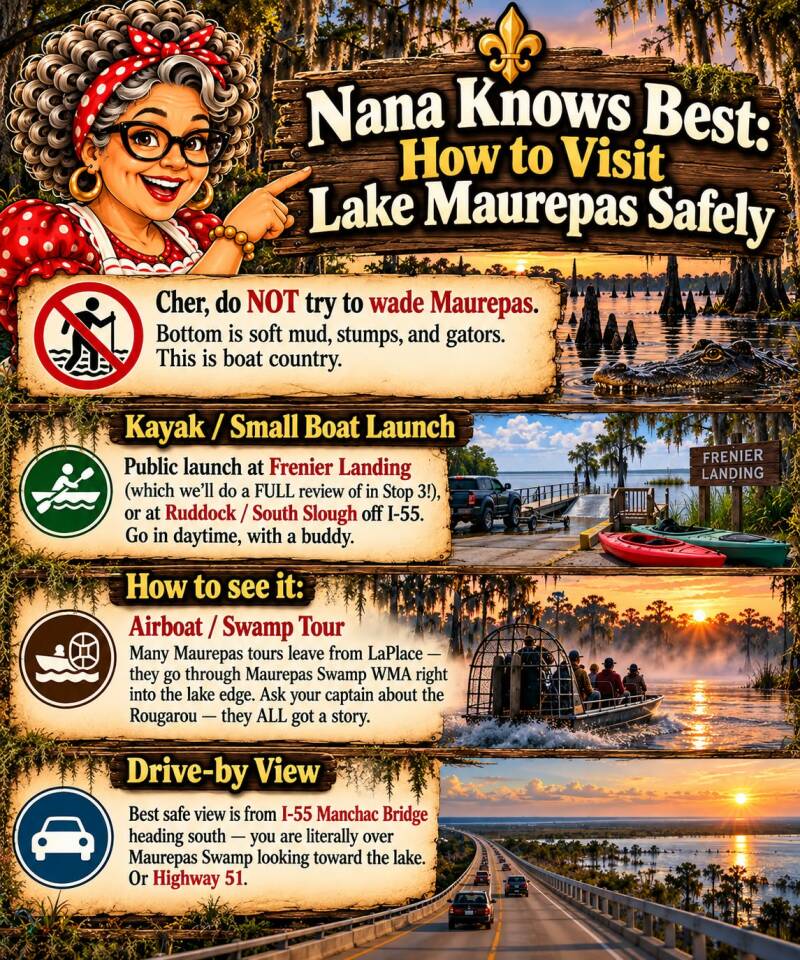
Nana Knows Best: How to Visit Lake Maurepas Safely
Cher, do NOT try to wade Maurepas. Bottom is soft mud, stumps, and gators. This is boat country.
How to see it:
Kayak / Small Boat Launch: Public launch at Frenier Landing (which we'll do a FULL review of in Stop 3!), or at Ruddock / South Slough off I-55. Go in daytime, with a buddy.
Airboat / Swamp Tour: Many Maurepas tours leave from LaPlace — they go through Maurepas Swamp WMA right into the lake edge. Ask your captain about the Rougarou — they ALL got a story.
Drive-by View: Best safe view is from I-55 Manchac Bridge heading south — you are literally over Maurepas Swamp looking toward the lake. Or Highway 51.
What to bring:
Bug spray, sunscreen, hat
Closed-toe water shoes
Plenty water — that sun reflects and will cook you
Whistle, life jacket, and a waterproof phone pouch
Don't go out at night alone. Period.
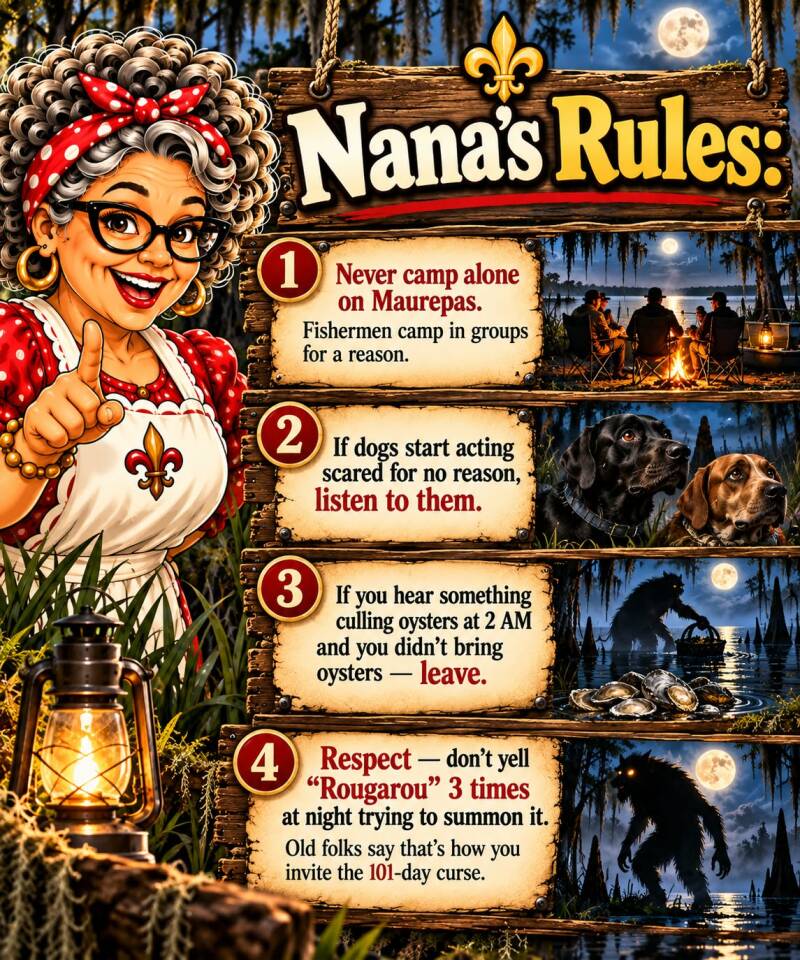
Nana's Rules:
Never camp alone on Maurepas. Fishermen camp in groups for a reason.
If dogs start acting scared for no reason, listen to them.
If you hear something culling oysters at 2 AM and you didn't bring oysters — leave.
Respect — don't yell "Rougarou" 3 times at night trying to summon it. Old folks say that's how you invite the 101-day curse.
Where to Eat After Maurepas — Save It For Stop 3!
You're right by Frenier Landing Restaurant in LaPlace — sitting on stilts right over Lake Pontchartrain near Maurepas Pass. Thin fried catfish, alligator bites, cold beer with the lake behind you. That's our FULL Stop 3 — Julia Brown's curse + eating at Frenier Landing — so I'm gonna save the full food review, but go ahead and put it on your list.
Also close: Middendorf's Manchac — if you didn't stop on the way, stop on the way back.
Frequently Asked Questions
Is it safe to kayak or boat on Lake Maurepas?
Yes, during daylight hours with a buddy and the right gear — a life jacket, whistle, and waterproof phone pouch are non-negotiable since the lake is shallow, stump-filled, and easy to get turned around in. Avoid wading (the bottom is soft mud and there are gators), and never go out on the water alone or after dark.
Do I need a boat to see Lake Maurepas, or can I view it from land?
You can get a great safe view without a boat at all — the I-55 Manchac Bridge heading south puts you right over the Maurepas Swamp looking toward the lake, and Highway 51 offers a similar drive-by view. If you want to actually get out on the water, a guided airboat or swamp tour from LaPlace is the easiest way without needing your own boat.
Is the Rougarou story about Lake Maurepas based on real folklore, or is it just a modern legend?
It's real, documented Cajun oral tradition — the oyster-culling story in particular comes from Loulan and Glen Pitre's folklore collections, and it's been told by fishermen and hunters around Maurepas for generations, alongside more recent accounts from the last 20 years.
Whether or not you believe it, the stories themselves are authentic Louisiana folklore, not something made up for a blog.
What's the best time of day to visit Lake Maurepas?
Daytime, and ideally not the hottest stretch of afternoon — morning or late afternoon light is easier on you and better for spotting wildlife from a boat or the bridge. Every story in this post happened at night for a reason; that's not the time to be out there yourself.
Why do people leave 13 pebbles or grains of rice as a Rougarou charm?
Old Cajun folklore says the Rougarou can only count to 12, so leaving 13 small objects on a windowsill or boat deck supposedly keeps it counting all night instead of bothering you — it loses track and has to start over, and dawn comes before it finishes.
It's a folk charm, not a guaranteed safety measure, but it's a real piece of the tradition my own Daddy swore by.
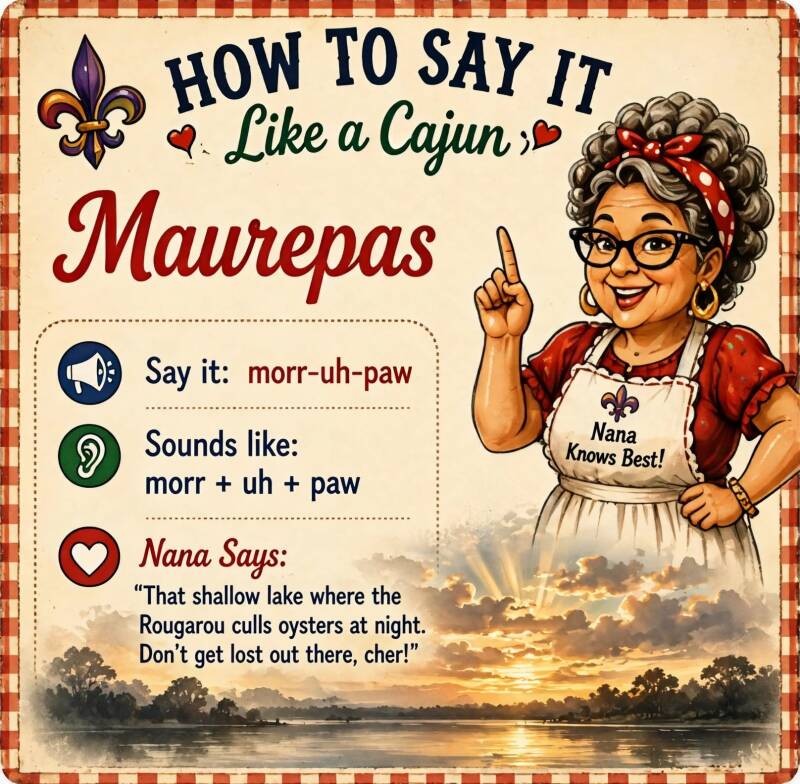
How to Say it Like a Cajun
Before you go telling your friends about this trip, let's fix something — most folks say "Maurepas" wrong, and cher, it's an easy one to get right once you hear it. It's morr-uh-paw. Not "more-uh-pass," not "mo-repas" — just morr, uh, paw, like you're pointing your paw at the lake.
Say it right and the old timers around Manchac will know you did your homework.
More From Nana
Following the whole Rougarou Road Trip? Here's the rest of it:
- Stop 1: Honey Island Survival Kit [HERE]
- Stop 3: Manchac Swamp Curse [HERE]
- Stop 3.5: Julia's Table at Frenier Landing [HERE]
- Stop 4: The Atchafalaya Basin [HERE]
Rougarou Roadtrip: Haunted Cajun Louisiana Travel Series
Nana's Bottom Line for Stop 2
Lake Maurepas looks calm and shallow in the day. But ask any fisherman who stayed too late — that lake is watched. Whether it's a cursed man counting rice, a big wolf walking like a man, or just a story to keep us out the dark water — it works.
I believe those old fishermen. Something was culling those oysters.
Have YOU or your paw-paw ever seen red eyes or heard something tall moving through Maurepas? Drop it in the comments — I read every one.
Next Up: Rougarou Road Trip Stop 3 — The Curse of Julia Brown & Eating at Frenier Landing — where we visit the voodoo priestess grave, the mass grave of 1915, and eat where the ghost towns used to be.
With love, bug spray, and 13 pebbles on the windowsill, Nana Tee ⚜️🐺
👉 Get everything on this list in one click: Shop Nana's Lake Maurepas Safety Kit
Sources & Respect: Stories adapted from Cajun oral tradition, Loulan & Glen Pitre's La Chenille and Belize collections (oyster culling story), Louisiana Folklore Society records, and eyewitness accounts from Maurepas Swamp WMA fishermen and hunters. For informational/folklore purposes.
Add comment
Comments
So many wonderful memories at that camp & in the lake