


Cher, If You're Up at 2 AM Itching and Aching — This One's For You
I used to fall asleep fine. Then menopause came and suddenly I was up at 1:13 AM, wide awake, scratching my arms and legs, knees aching, tossing that sheet off and on, off and on. Hot flash, then chill. Itch, then ache. No sleep.
If that's you, baby, you are not alone.
Getting a restful night's sleep during menopause is harder because estrogen drops. Estrogen affects our temperature control, our skin collagen and oil, our joint lubrication, and our sleep chemicals. When it drops, we get drier skin, more sensitive skin, stiffer joints, and lighter, more broken sleep.
There is no single fix.
👉 Shop the exact wellness swaps Nana made: Shop Nana's Sleep & Comfort Routine
For me, it was changing my habits — my bedroom, my bedtime, my meals, my movement — and adding some gentle natural tools like essential oils to support the routine.
This is for information only, not medical advice. If you have severe itching, swelling, severe joint pain, or can't sleep for weeks, please talk to your healthcare provider.
Why Sleep Gets So Broken in Menopause
It's usually not one thing. It's three things at once:
Temperature swings: Night sweats and hot flashes wake you up before you get deep sleep.
Skin changes: Lower estrogen means less collagen and natural oil. Skin gets drier, thinner, and more itch-prone, especially at night.
Joint discomfort: Lower estrogen can affect how joints feel — stiffer in the morning, achy at night, especially after a long day.
When you itch and ache, you don't get into that deep, restorative sleep. Then the next day you are exhausted, which makes everything feel worse.
Nighttime Menopausal Itching — Why It Happens & Habits That Helped Me
That crawling, tingling, itchy feeling — especially on arms, legs, back, neck? That's often called formication, but most of us just call it "I can't stop scratching."
Why it happens at night: Dry air from AC or heat, hot showers that strip natural oils, harsh soaps, rough pajamas and sheets, and drier skin from low estrogen. At night, we notice it more because there are no distractions.
Habit & Lifestyle Changes That Helped Me Most:
Lukewarm, not hot: I stopped taking scalding showers at night. Lukewarm water, 5-7 minutes, gentle fragrance-free cleanser — not bar soap that dries you out.
Moisturize while damp: Right after shower, pat — don't rub — and while skin is still damp, I lock it in with a thick, fragrance-free moisturizer. That's the barrier trick my dermatologist taught me.
Cotton everything: Light, breathable cotton pajamas, cotton sheets washed in fragrance-free detergent. No scratchy fleece or polyester that traps heat.
Cool & humid bedroom: I keep my Pearl River bedroom at 68° with a fan, and in winter I run a small humidifier. Dry air = itchier skin. Aim for 40-50% humidity.
Hydrate inside: Regular water during the day, not just at night when it makes you get up to pee. And I cut back on sugar snacks and alcohol at night — both made my itching worse.

My Natural Tool for Itching Nights:
In the evening, I like to roll this sleep roller on the back of my neck, wrists and feet — it sets the mood for sleep and helps me not focus on scratching.
For skin, I just use this fractionated coconut oil. It's cool, calming, unscented simplicity. It helps me relax and not feel so dry.
Menopausal Joint Discomfort at Night — Achy Knees, Hips & Hands
I would go to bed okay and wake up at 3 AM with stiff knees, achy hips, or sore fingers. It made it hard to get comfortable.
Why it happens: Estrogen helps keep inflammation balanced and joints lubricated. When it shifts, joints can feel stiffer, especially after sitting all day or if your mattress doesn't support you.
Dehydration and long days on your feet make it worse too.

Habit & Lifestyle Changes That Helped Me Most:
Gentle movement before bed, not hard workouts: A 10-minute evening stretch for calves, hips, and shoulders — not a hard workout that wires you. During the day, I do my 20-30 minute walk, which actually helps my joints feel less stiff at night.
Warm bath or warm compress: 15 minutes in a warm (not hot) bath with Epsom salts relaxes tight muscles around the joints before bed.
Supportive bed setup: A pillow between the knees for side sleepers (saved my hips!), and making sure your mattress isn't sagging. I also keep my knees a little elevated when on my back.
Anti-inflammatory plate & timing: Regular meals with protein, healthy fats, and colorful veggies instead of sugary late-night snacks. I eat my heaviest meal earlier and keep evening meals lighter — heavy, salty meals made my morning stiffness worse.
Caffeine & screen cut-off: No regular coffee, black tea, or energy drinks after 3 PM — I switched to my morning Dose mushroom coffee ritual only. And screens off 30 minutes before bed. Both helped my sleep and my aches.
My Natural Tool for Achy Nights:
For my nightly wind-down massage, I use this sore no more roller and gently massage around — not directly on — achy knees and hands. The ritual itself, plus the warm, grounding scent, signals to my body it's time to rest. I also stretch — it calms my body down.
How to Use This Routine
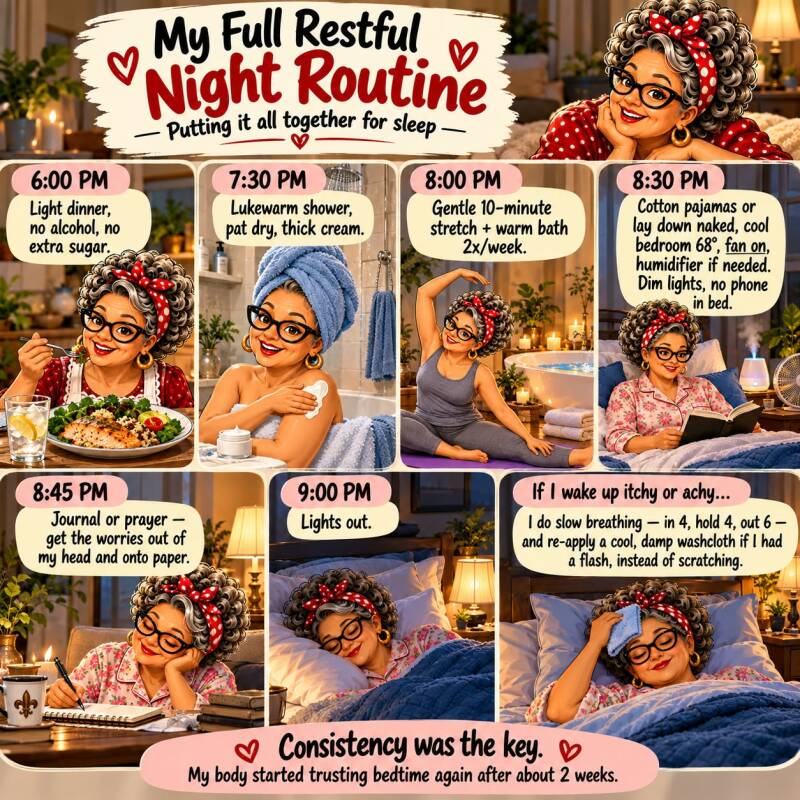
My full restful night routine — putting it all together for sleep. This is my actual 57-year-old Nana routine that finally gave me 6-7 hours again:
6:00 PM — Light dinner, no alcohol, no extra sugar.
7:30 PM — Lukewarm shower, pat dry, thick cream.
8:00 PM — Gentle 10-minute stretch + warm bath 2x/week.
8:30 PM — Cotton pajamas or lay down naked, cool bedroom 68°, fan on, humidifier if needed. Dim lights, no phone in bed.
8:45 PM — Journal or prayer — get the worries out of my head and onto paper.
9:00 PM — Lights out. If I wake up itchy or achy, I do slow breathing — in 4, hold 4, out 6 — and re-apply a cool, damp washcloth if I had a flash, instead of scratching.
Consistency was the key. My body started trusting bedtime again after about 2 weeks.
When to Call Your Doctor
If itching is severe, with rash, blisters, or hives; if joint pain has swelling, redness, fever; if you have frequent palpitations, heavy bleeding, or you haven't slept in weeks — please get checked, cher.
Bring your symptom tracker: National Menopause Foundation Symptom Checklist
Frequently Asked Questions
How long before this routine actually helps with sleep?
For me, my body started trusting bedtime again after about 2 weeks of doing it consistently — every night, not just when I remembered. Give it a full 2 weeks before deciding whether it's working for you.
Is the nighttime itching actually a real menopause symptom, or is it just dry skin?
It's real, and it has a name — formication, that crawling or tingling feeling. It's caused by the drop in estrogen affecting collagen and natural oil production, on top of ordinary dry skin, which is why regular lotion alone doesn't always fix it.
Can I do this routine if I don't want to use essential oils?
Yes — the habits (lukewarm showers, moisturizing while damp, cotton sheets, a cool humid bedroom, gentle evening movement) do most of the work on their own. The oils are a calming ritual add-on, not a required step.
Why does a warm bath help joints if heat isn't supposed to help itching?
They're solving two different problems. Hot water strips your skin's natural oils and makes itching worse, but warm water on tight muscles and joints relaxes them before bed — that's why the routine uses lukewarm for showers but warm for an occasional Epsom salt bath.
What if I do everything and still can't sleep?
If you've given the full routine a real 2-3 week try and you're still not sleeping, or your itching or joint pain is severe, that's the point to talk to your healthcare provider rather than keep adjusting habits on your own — see the "When to Call Your Doctor" section above.
More From Nana
Menopause Fatigue: Real Causes & Nana's Natural Relief Guide
34 Symptoms of Menopause Explained | Nana's Real Talk Guide
REVIVE Shampoo Review: Rosemary Oil for Menopause Hair Loss
Nana's Bottom Line
Restful sleep in menopause didn't come from one magic thing. It came from:
Cool, cotton, humid bedroom + lukewarm showers + moisturize while damp + gentle daily movement + lighter evenings + early caffeine cut-off + a calm scent ritual with oils that support relaxation.
The itching got less because my skin barrier got stronger. The aching got less because I supported my joints during the day and gave them warmth and rest at night. And my sleep got deeper because my bedroom finally felt safe to my body again.
If you want to try my exact oils I use for sleep, itching calm, and that evening joint comfort massage, I'll link them below — all diluted, all gentle, all part of a habit, not a cure.
👉 Shop the exact wellness swaps Nana made: Shop Nana's Sleep & Comfort Routine
What keeps YOU up — the itch, the ache, or the sweats? Tell me in the comments, I read every one.
Affiliate disclosure: Contains affiliate links for oils I personally use. I may earn a small commission at no extra cost to you.
For informational purposes only. Essential oils can irritate skin and affect hormones. Always dilute, patch test, avoid eyes/mucous membranes, keep away from children/pets, and consult your healthcare provider if pregnant, nursing, or taking medications. For medical advice or diagnosis, consult a professional.
Add comment
Comments