


Listen Up, Baby — This Ain't Just Being Tired
I thought tired was raising kids, working, and cooking for everybody and their cousin.
But this menopause fatigue? Cher, this is different.
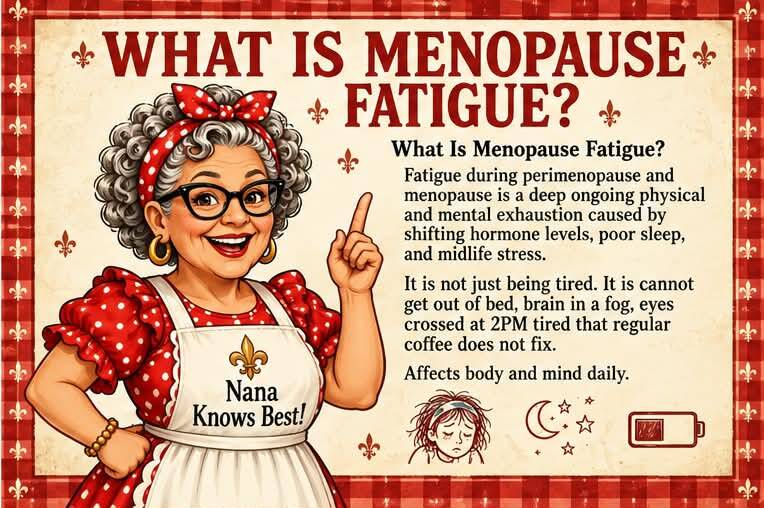
Fatigue during perimenopause and menopause is a deep, ongoing physical and mental exhaustion caused by shifting hormone levels, poor sleep, and midlife stress. It's that can't-get-out-of-bed, brain-in-a-fog, eyes-crossed-at-2PM tired that coffee from the gas station don't fix.
At 57, I was falling asleep on my couch in Pearl River at 7 PM.
I knew something had to change. So Nana did her homework.
👉 Ready to build your own morning ritual? Shop the exact wellness swaps Nana made: [HERE]
Why We Get So Wiped Out — The Real Causes of Menopause Fatigue
Hormone Fluctuations: Dropping levels of estrogen, progesterone, and testosterone disrupt cellular energy production, brain chemistry, and your internal sleep clock. Your body is literally trying to figure out a new normal.
Disrupted Sleep: Night sweats, hot flashes, and insomnia prevent deep, restorative rest, leading to severe daytime tiredness.
You can't pour from an empty cup, and you can't get energy if you never get deep sleep.
Midlife Stress: High demands from work and family raise cortisol levels, which can drain your body's energy reserves. Cortisol up, energy down. That's the seesaw.
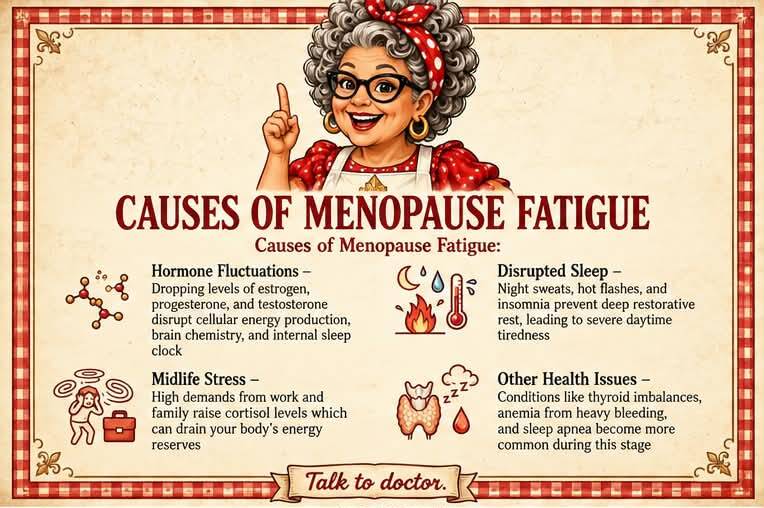
Other Health Issues: Conditions like thyroid imbalances, anemia from heavy bleeding in perimenopause, and sleep apnea become more common during this stage.
That's why Nana always says — get your labs checked, cher! Talk to your doctor.
So How We Find Relief? Nana's Multi-Pronged Way — No Single Magic Pill
I learned managing menopause fatigue naturally requires a multi-pronged approach that addresses hormone shifts, nutrient gaps, and sleep quality. Because there is no single natural fix, focusing on a combination of lifestyle changes and targeted nutrition yields the best results.
1. I Fixed My Sleep Habits First
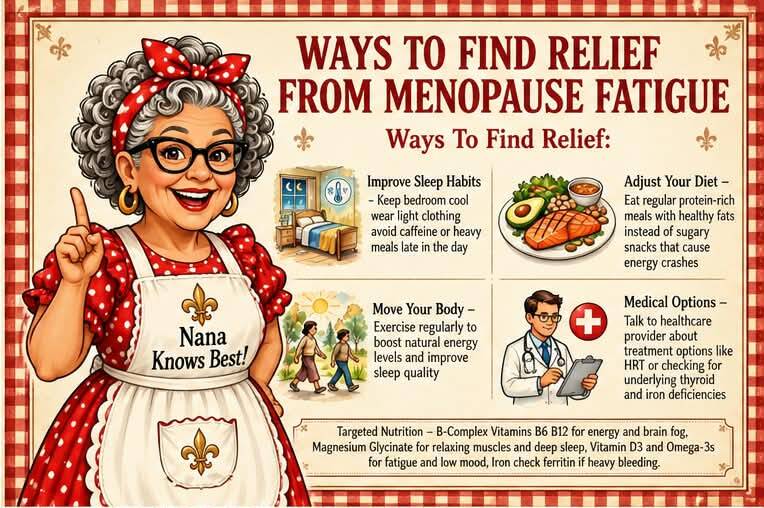
Keep your bedroom cool — I keep mine at 68 with a fan, wear light cotton or no clothes at all, and I stop that heavy gumbo and sweet tea late at night. And that old habit of drinking coffee all day? That was killing my sleep.
Nana's Rule — The 3:00 PM Caffeine Rule: Relying on caffeine to fight fatigue backfires by ruining your deep sleep. I cut off all regular coffee, black tea, and energy drinks by 3 PM at the latest. This one change helped more than anything.
2. I Adjusted What I Put On My Plate
What you eat directly impacts your cellular energy production. Deficiencies become more common during menopause and make fatigue worse.
Regular, protein-rich meals with healthy fats instead of sugary snacks that cause energy crashes.
That's why I do my protein + Dose every morning — 20g+ to start, no sugar crash.
B-Complex Vitamins: B6 and B12 are essential for converting food into usable cellular energy and clearing that brain fog.
Magnesium Glycinate: Highly absorbable and excellent for relaxing muscles, lowering stress, and improving deep sleep quality.
Vitamin D3 & Omega-3's: Low vitamin D is heavily linked to midlife fatigue and low mood. I get my D checked every year, and I eat salmon and sardines when I can.
Iron: If perimenopause is causing heavy or irregular bleeding, low iron might be the root of your exhaustion.
Always get a blood test to check ferritin before supplementing — don't just guess, baby.
3. I Moved My Body — Gentle, Not Punishing
Exercise regularly to boost your natural energy levels and improve sleep quality. For me, that's not running marathons. It's a brisk 30-minute walk around the neighborhood, a swim, or gentle yoga. It triggers those feel-good hormones and builds stamina without draining you more.
4. I Added Gentle Herbal Support — The Adaptogens
Herbs don't give you a sudden caffeine-like spike; instead, they help your body regulate its stress hormones (cortisol) and adapt over time.
This is where my morning Dose came in and changed everything for me.
Why I Switched to Dose Mushroom Coffee for Menopause Fatigue
I was a 3-pot-a-day community coffee girl. But regular coffee gave me jitters, then a crash, then it ruined my sleep, then I was more tired the next day. A vicious cycle.
I switched to Dose — Mushroom Coffee + Protein — and
here's why Nana keeps it in her kitchen:
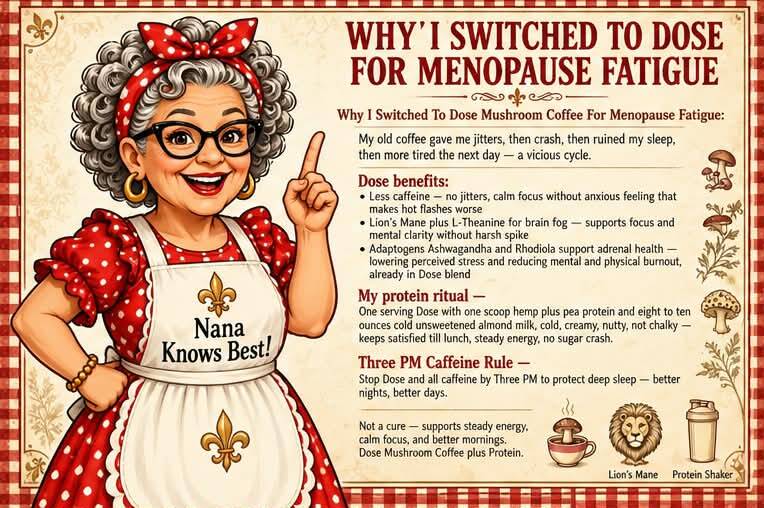
Less caffeine, no jitters: Dose uses clean coffee plus functional mushrooms, so I get calm focus without that wired, anxious feeling that makes hot flashes worse.
Lion's Mane + L-Theanine for brain fog: That menopause fog where you walk into a room and forget why? Lion's Mane and L-Theanine support focus and mental clarity without a harsh spike. I can finish my blog, pay my bills, and not feel scattered.
Adaptogens Ashwagandha & Rhodiola Support: These are the same adaptogens studies show support adrenal health, lowering perceived stress and reducing mental and physical burnout. Dose already has them in the blend, so I'm not taking 10 different pills.
My protein ritual: I mix 1 serving Dose with 1 scoop hemp + pea protein and 8-10 oz cold unsweetened almond milk — cold, no ice needed. It tastes creamy, nutty, not chalky, keeps me satisfied till lunch, and gives me steady energy instead of a sugar crash.
It ain't a cure, cher. It is my morning ritual that supports steady energy, calm focus, and better days. And because I stop it by early afternoon, my sleep is better at night.
👉 You can find the one I use here: My Dose Mushroom Coffee on Amazon — I mix it cold, just how I like it.
5. Mind-Body Resets
Evidence from The Menopause Society shows that Cognitive Behavioral Therapy (CBT) and mindfulness-based stress reduction are highly effective at lowering the stress that drains your energy.
For me, that's 5 minutes of deep breathing on my porch, saying my prayers, and not looking at my phone first thing.
When to Talk to Your Doctor
Medical Options: Talk to a healthcare provider about treatments like hormone replacement therapy (HRT) or checking for underlying thyroid and iron deficiencies. You can learn more about managing these symptoms through The Menopause Society.
If you have heavy periods, racing heart, weight changes, or fatigue so bad you can't function — please go get checked, baby. Bring a list of symptoms.
Nana's Morning Routine at a Glance
Cool bedroom (68°F + fan)
Caffeine cutoff by 3 PM
Protein-rich breakfast — Dose + hemp/pea protein + cold almond milk
30-minute walk or gentle movement
5 minutes of quiet/prayer before checking my phone
Frequently Asked Questions
How is menopause fatigue different from normal tiredness?
Normal tiredness usually resolves with a good night's sleep. Menopause fatigue is deeper and more persistent — it's tied to hormone fluctuations, disrupted sleep from night sweats and hot flashes, and rising cortisol, so it doesn't fully lift even after rest. It's a whole-body shift, not just a busy week catching up with you.
Can diet alone fix menopause fatigue?
Diet helps a lot — protein-rich meals, B-vitamins, magnesium, and vitamin D all support cellular energy — but it's rarely a complete fix on its own. The women who see the biggest improvement usually combine nutrition with better sleep habits, gentle movement, and stress management together, not just one piece.
Is Dose Mushroom Coffee safe if I already drink regular coffee?
Dose is a lower-caffeine alternative to regular coffee rather than something you add on top of it. Most people switch to it in place of their usual coffee to avoid the jitter-and-crash cycle regular caffeine can cause. If you have caffeine sensitivity or are on medication, check with your doctor before switching.
When should I consider HRT instead of natural remedies?
That's a conversation for your doctor, not a blog post —
but generally, if fatigue is severe, disrupting your daily function, or paired with other symptoms like heavy periods or racing heart, it's worth discussing HRT and lab work (thyroid, ferritin, vitamin D) with a healthcare provider. Natural approaches like better sleep habits and targeted nutrition can help alongside medical treatment, not necessarily instead of it.
How long before I notice a difference from these changes?
Sleep changes (like the 3 PM caffeine cutoff) often show results within a few days to a week. Nutritional changes and building a consistent morning routine typically take 2-4 weeks of consistency before you notice steadier energy throughout the day.
More From Nana
Best Protein Powder for Menopause — Hemp + Pea Blend Review
REVIVE Shampoo Review — Rosemary Oil for Menopause Hair Loss
REVIVE Radiance Cleanser Review — Gentle Skincare for Menopause
Nana's Bottom Line
Menopause fatigue is real. It's hormones, it's poor sleep, it's cortisol, and sometimes it's low iron or thyroid.
For me, getting my mornings right made my whole day right: Cool bedroom + early caffeine cut-off + protein-rich breakfast + daily walk + my Dose ritual for calm, steady focus.
No more gas station coffee jitters. No more 2 PM crash on the couch.
Just Nana getting her energy back, one morning at a time.
👉 Ready to build your own morning ritual? Shop the exact wellness swaps Nana made: [HERE]
Affiliate disclosure: Contains affiliate links. I may earn a small commission at no extra cost to you.
This blog is for informational purposes only and is not medical advice. For medical advice or diagnosis, consult a professional.
Add comment
Comments